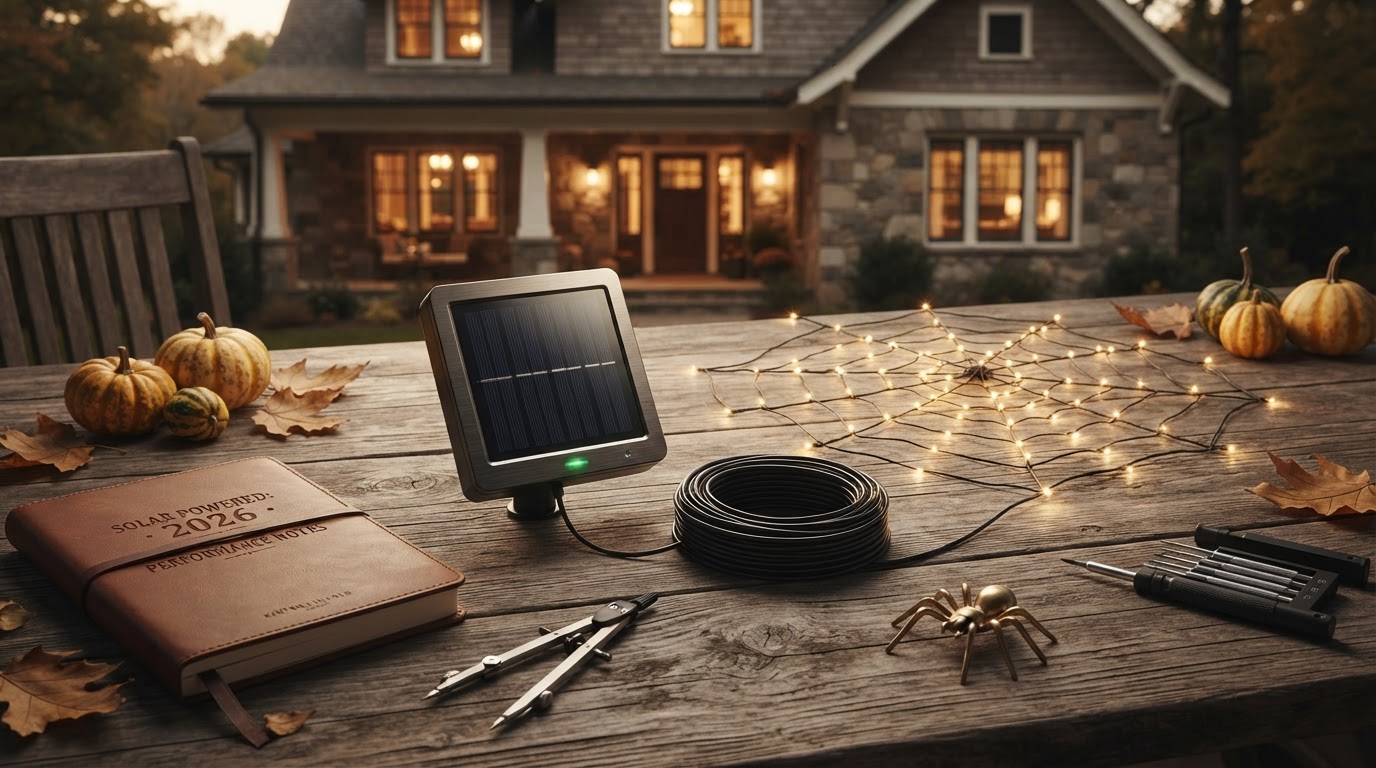
Solar Spider Web Lighting Efficiency and Performance
 Maya ChenContributing Editor
October 1, 2026. This analysis examines the technical limitations and performance benchmarks of solar spider web lighting systems. It is intended for consumers who prioritize hardware durability and energy efficiency over aesthetic novelty.
The Efficiency Gap in Seasonal Lighting
The conventional wisdom says that all seasonal outdoor lighting is essentially disposable, a temporary fixture designed to last a single month before entering a landfill. However, the move toward solar-integrated decorations has introduced a new variable: the efficiency of the photovoltaic conversion in low-light autumn months. Most consumers assume that a solar panel is a solar panel, yet there is a massive delta between entry-level units and high-density LED arrays. According to a product showcase from Hiboom, a giant 23ft spider web decoration utilizes 180 LEDs with eight different preset modes. While this sounds impressive, the surface area of the solar collector must be perfectly calibrated to sustain that many nodes through a standard October night. Run the math: a 180-LED system drawing even minimal milliamps requires a battery capacity that many generic units simply do not possess. When you transition to [outdoor solar spider web decorations](/blog/outdoor-solar-spider-web-decorations), the stakes increase. The resistance to moisture and the ability to maintain a charge during overcast weeks are the only metrics that actually matter. Most manufacturers obscure these figures behind marketing terms like "spooky glow," ignoring the fact that a light that dies at 9:00 PM fails its primary function as a security and aesthetic feature.
Technical Specifications of Solar Spider Web Systems
Photo by Unggul Budi on Pexels
Solar Spider Web addresses the reliability gap by focusing on high-density LED counts and weather-resistant wiring that exceeds the standard seasonal grade. While a solar powered halloween spider web might seem like a simple commodity, the engineering of the web structure dictates the longevity of the lights. For instance, LumaBase produces an electric version that features 70 amber LED lights across a 53.3-inch diameter. In the solar space, the density is often higher to compensate for lower lumen output per bulb. Data from eBay listings for similar solar halloween spider web kits shows high-end models reaching 135 LED bulbs, supported by ground stakes and specialized hooks to maintain tension. Tension is critical; if the web sags, the internal wiring suffers from fatigue, leading to the short circuits common in cheap solar spider web lights found at big-box retailers. The Solar Spider Web design incorporates reinforced nodes to prevent this mechanical failure. Furthermore, the integration of 226 LED illumination systems, as seen in recent TikTok demonstrations by Claudia Flores, suggests a shift toward higher intensity arrays that require sophisticated power management. Solar Spider Web utilizes these high-count arrays but pairs them with larger lithium-ion buffers to ensure the eight lighting modes—ranging from steady-on to sequential flashes—don't deplete the cell before midnight. This is not about decoration; it is about the physics of energy storage and the structural integrity of the nylon webbing.
A Framework for Seasonal Hardware Selection
Here's the part nobody talks about: the cost of failure in solar decorations is higher than electric ones because a failed solar unit is often non-repairable due to sealed battery compartments. When selecting a solar halloween spider web, the consumer must move past the visual appeal and audit the hardware. A robust solar powered halloween spider web should be treated as a piece of outdoor electrical equipment rather than a toy. I'll change my mind when I see a generic brand offer a three-year warranty on their photovoltaic cells, but until then, the following checklist serves as the minimum viable standard for performance:
- LED Density: Minimum of 100 bulbs for webs exceeding 4 feet in diameter to ensure visibility.
- Mounting Hardware: Inclusion of at least 5 ground stakes and a central gutter hook to prevent wind-shear damage.
- Battery Chemistry: Verification of Lithium-ion over Ni-MH for better cold-weather discharge rates.
- Mode Memory: The ability for the controller to remember the last setting after a full power cycle.
- Ingress Protection: An IP65 rating or higher to withstand sustained autumn rainfall.
Sources
- Electric Lighted Spider Web and Spider - LumaBase
- Giant 23ft Spider web decoration with LED lights from Hiboom - YouTube
- Outdoor Solar Powered Halloween Decorations Spider Web Lights - eBay