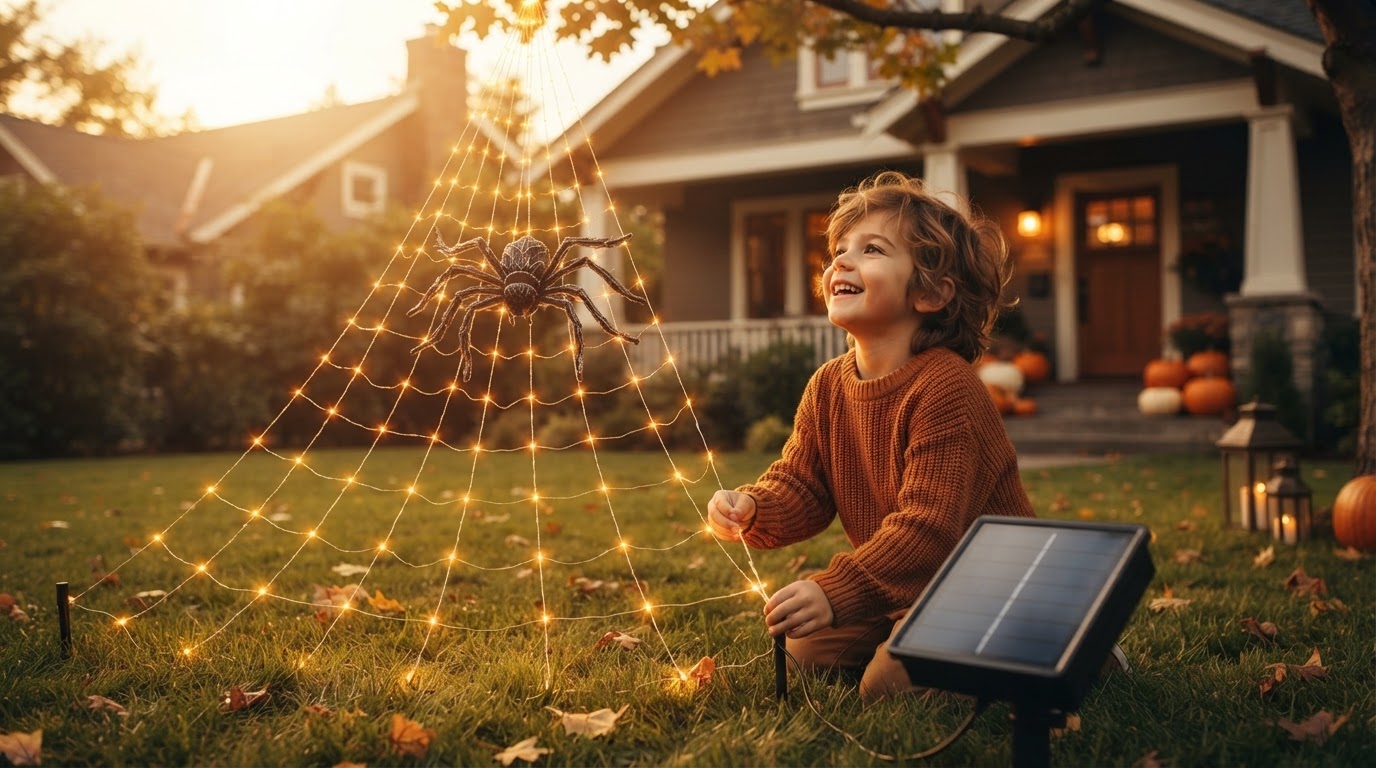
Optimizing Solar Spider Web Performance for Outdoor Spaces
 Maya ChenContributing Editor
September 26, 2026. This analysis details the technical requirements for deploying high-efficiency solar spider web decorations in residential outdoor environments. It provides a framework for homeowners who prioritize energy independence and automated lighting over disposable, battery-operated alternatives.
The Efficiency Gap in Seasonal Lighting
The conventional wisdom says that outdoor holiday lighting is inherently wasteful, requiring either a spike in the electric bill or a landfill-bound pile of alkaline batteries. However, the move toward renewable energy in the seasonal decor sector suggests a shift in how we manage temporary installations. The primary challenge is not the availability of light, but the conversion efficiency of small-scale photovoltaic cells during the shorter days of autumn. According to ILLUMINEW, modern solar Halloween metal hanging decorations now utilize rust-resistant frames and LED arrays that are specifically designed to withstand the varying thermal conditions of late October. Despite this, many consumers fail to account for the "solar shadow" cast by eaves, porch overhangs, and deciduous trees that haven't yet dropped their leaves. A solar panel operating at 15% efficiency—standard for most consumer-grade units—requires at least six hours of direct, unshaded sunlight to power a 100-LED array for a full eight-hour night cycle. When users ignore the specific placement requirements of solar spider web lights, they often blame the technology rather than the installation geometry. The physics are simple: if the incident light is blocked by a gutter, the battery cannot reach a full state of charge, leading to the dimming or flickering often seen in late-night displays. This is especially critical when deploying [Halloween spider web lights solar powered](/blog/halloween-spider-web-lights-solar-powered) systems that feature higher LED counts or larger physical footprints.
Engineering Resilience into Decorative Webs
Here's the part nobody talks about: the mechanical stress placed on a web-style decoration is significantly higher than that of a standard string light. A spider web acts as a sail, catching wind and accumulating moisture, which can strain the thin wiring integrated into the mesh. Solar Spider Web designs address this by utilizing reinforced nylon or metal structures that serve as both the aesthetic element and the conduit for the electrical circuit. For instance, the Hiboom 23ft spider web utilizes 180 LEDs across a massive surface area, requiring a robust solar controller to manage eight different lighting modes without exhausting the internal Ni-MH or Li-ion battery. Run the math: a 23-foot span creates a significant drag coefficient. If the web is not anchored with tension-relief points, the internal copper wiring will eventually fatigue and break. This is why high-quality [solar purple spider web lights](/blog/solar-purple-spider-web-lights) are often built with thicker gauge wire than their indoor counterparts. Furthermore, the integration of green glow eyes in certain models, like those from ILLUMINEW, adds a secondary power draw that must be balanced by the solar controller's firmware to ensure the main web remains illuminated until dawn. By selecting components that prioritize waterproof housing and UV-stabilized materials, users can avoid the mid-season failures common in cheaper, non-branded alternatives. Even when choosing specific colorways, such as orange solar spider web lights, the wavelength of the LED does not impact power consumption as much as the quality of the solar collector itself.
A Framework for Outdoor Deployment Success
Transitioning to a fully solar-powered outdoor display requires a systematic approach to placement and maintenance rather than a "set it and forget it" mentality. The reliability of these systems is tied directly to the user's willingness to monitor local weather patterns and adjust panel angles as the sun's path across the sky shifts lower in the horizon during the fall. While many products, such as the 14.8ft Solar Halloween Spider Web found on eBay, offer various light modes, the highest energy-consuming modes (such as steady-on) should only be used when the previous day provided clear skies. For optimal performance, follow this deployment checklist:
- Verify the solar panel’s orientation to ensure it faces true south, clear of any structural shadows between 10:00 AM and 2:00 PM.
- Clean the photovoltaic surface weekly with a damp microfiber cloth to remove dust, pollen, or frost that can reduce energy absorption by up to 30%.
- Inspect the tension of the web lines after high-wind events to prevent wire fatigue near the LED nodes.
- Test the light sensor by covering the panel during daylight hours to ensure the auto-on functionality is triggering at the correct lux level.
- Store the battery in a charged state if the unit is taken down early to prevent deep discharge cycles that shorten battery lifespan.