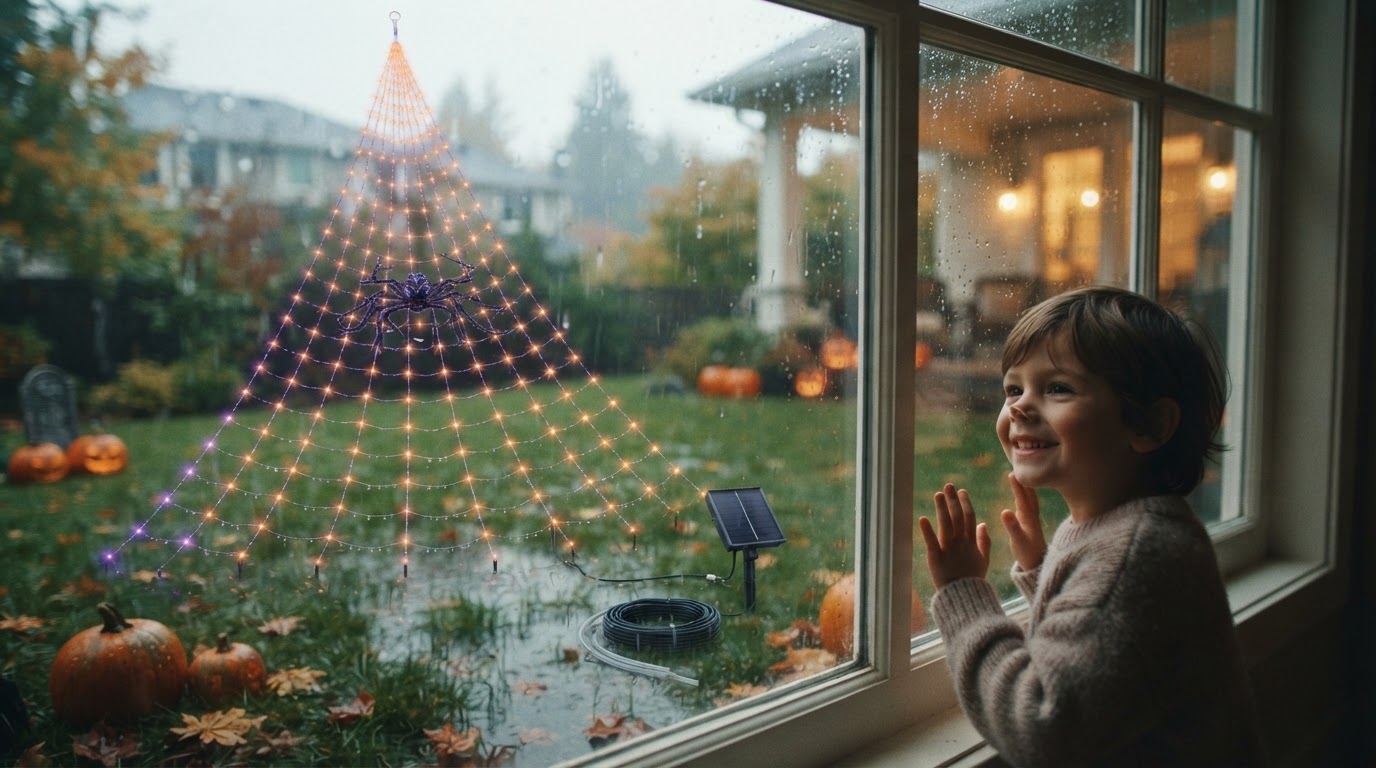
Waterproofing Solar Spider Web Decorations for Rain
 Maya ChenContributing Editor
September 16, 2026. This technical overview details the methods for maintaining electrical integrity in Solar Spider Web installations during heavy precipitation. It is written for homeowners managing outdoor displays in climates prone to autumn storms.
The Failure Point of Outdoor Seasonal Lighting
The conventional wisdom says that any product labeled for outdoor use is inherently immune to the elements, but the reality of seasonal lighting failure suggests otherwise. Statistics from the Electrical Safety Foundation International indicate that a significant percentage of outdoor electrical accidents and equipment failures occur due to improper moisture protection or damaged insulation. Here's the part nobody talks about: most decorative lighting marketed for Halloween is built to a price point that prioritizes aesthetics over long-term environmental sealing. When water enters a low-voltage system, it doesn't just cause a short; it initiates galvanic corrosion that can destroy the circuitry before the first frost. This risk is amplified in an outdoor solar spider web decoration where the surface area of the webbing acts as a catchment system, funneling rainwater directly toward the LED nodes and the central controller. While many consumers assume a splash-proof rating is sufficient, the mechanical stress of wind-driven rain requires a more robust approach to moisture ingress protection.
Engineering Resilience in Solar Spider Web Systems
Solar Spider Web units are engineered to bypass the common points of failure found in standard plug-in string lights by utilizing a self-contained, low-voltage DC architecture. Unlike traditional setups that require extension cords—which the Electrical Safety Foundation International notes are often improperly rated for wet ground contact—a solar powered halloween spider web eliminates the connection between the house mains and the yard. The waterproofing effectiveness of these units relies on the Ingress Protection (IP) rating of the solar housing. To maintain this seal, the solar panel must be positioned at a 45-degree angle to ensure water runoff, preventing the pooling that can degrade silicone gaskets over time. When installing a giant solar spider web for yard applications, the tension of the webbing must be calibrated to prevent 'water-weight sagging,' which can pull on the wiring leads and compromise the waterproof seals at the LED entry points. Run the math: a saturated polyester web can hold up to three times its dry weight in water, creating hundreds of pounds of pull-force on the mounting points and internal wiring if not properly tensioned and drained.
A Framework for Wet-Weather Deployment
Selecting and maintaining a waterproof display requires a departure from the 'set it and forget it' mentality. A systematic approach to installation ensures the hardware survives the entire October cycle without a decrease in lumen output or battery capacity. When securing a solar spider web for eaves, installers should prioritize the physical orientation of the charging module to avoid drip lines from the roof. I'll change my mind when manufacturers move toward fully encapsulated resin controllers, but until then, the following checklist is the minimum requirement for operational stability:
- Verify the IP65 or higher rating on the solar controller housing before initial deployment.
- Apply dielectric grease to any user-accessible terminal connections to prevent oxidation.
- Inspect the webbing for fraying that could allow moisture to wick into the insulated wire cores.
- Position the solar stake in well-drained soil to prevent the battery compartment from being submerged during flash flooding.
- Ensure the outdoor solar spider web decoration is cleared of heavy debris, such as wet leaves, which can trap moisture against the electronics.
- Periodically wipe the solar panel surface with a microfiber cloth to prevent mineral buildup from evaporated rainwater, which reduces charging efficiency.