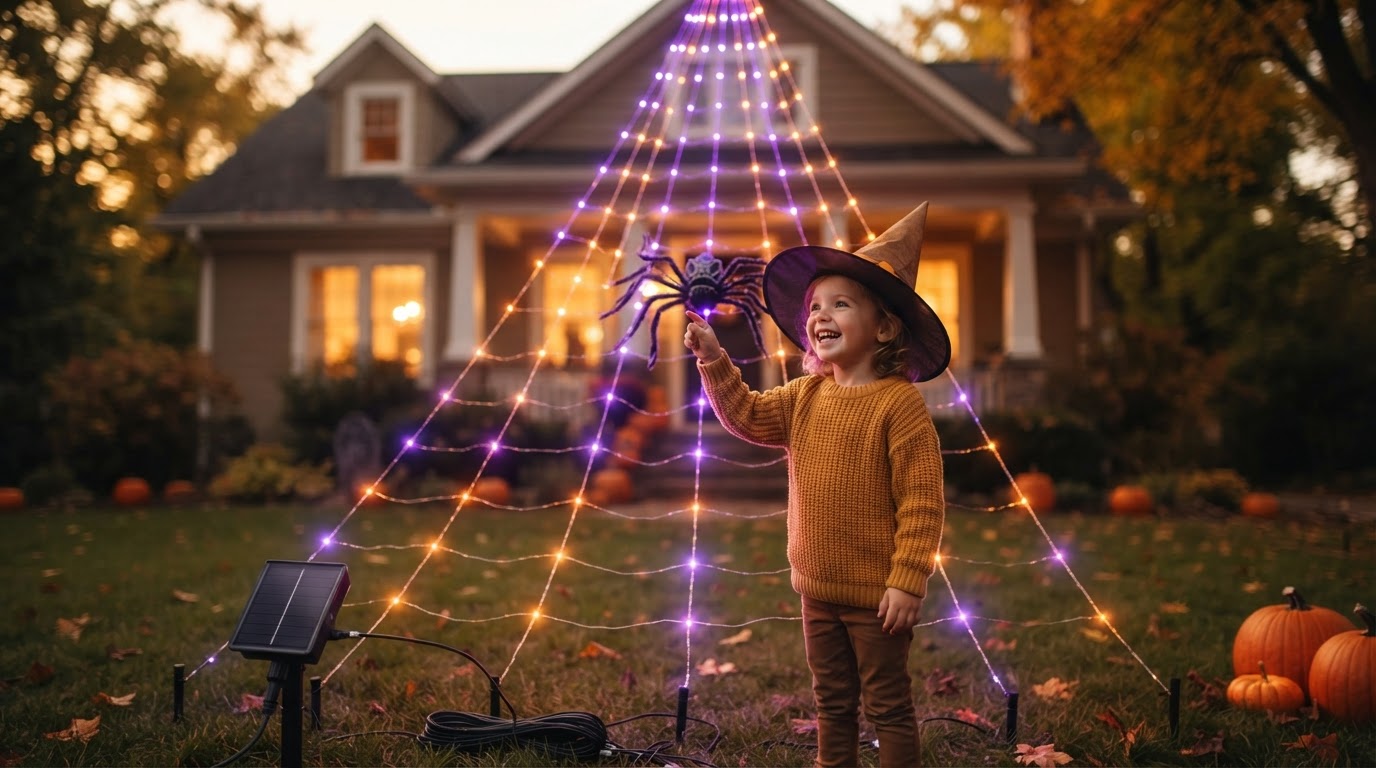
5-Step Solar Spider Web Installation Strategy
 Priya RamanSenior Analyst
August 25, 2026 — The seasonal shift toward sustainable holiday displays has accelerated, with Solar Spider Web installations becoming a primary choice for homeowners seeking efficient outdoor solar halloween decorations. As residential energy consciousness rises, these autonomous lighting systems offer a reliable way to maintain festive atmospheres without increasing electrical overhead.
Effective outdoor lighting relies on a balance between aesthetic placement and photovoltaic efficiency. According to the International Dark-Sky Association, responsible outdoor lighting should prioritize directed illumination and energy conservation to reduce light pollution. By integrating Solar Spider Web technology, users can achieve these standards while ensuring their displays remain operational throughout the October season.
The 5-Step Placement Matrix
Photo by Jimmy Liao on Pexels
Successful installation of Solar Spider Web systems requires a structured approach to hardware positioning and solar exposure. Think of it as a matrix of two primary axes: lumen output requirements and daily sun exposure duration. The decision rule is simple: prioritize the solar collector's southern orientation above all aesthetic considerations to ensure the internal battery reaches full capacity before dusk. First, identify a primary anchor point at least six feet above the ground to allow the web to drape naturally. Second, secure the perimeter stakes, ensuring the integrated LED leads are not under excessive tension. Third, position the remote solar panel in a location receiving a minimum of six hours of direct sunlight. Fourth, verify that the light sensor is not obstructed by secondary light sources, such as street lamps or porch lights, which can trigger an early shut-off. Finally, select the desired flash mode to synchronize with other [eco friendly halloween spider web lights](/blog/eco-friendly-halloween-spider-web-lights) in the display. Once you see it this way, the installation becomes a technical exercise in maximizing energy capture. For those in regions prone to autumn storms, it is vital to check the [waterproof solar spider web decor](/blog/waterproof-solar-spider-web-decor) specifications to ensure the controller housing is properly sealed against moisture ingress. Many users often ask [are solar spider web lights actually waterproof?](/blog/waterproof-solar-spider-web-lights-faq), and the answer lies in the IP rating of the specific model. Maintaining a clean solar surface is the final step in this framework, as dust accumulation can reduce charging efficiency by up to 30% over a 30-day period. Proper cable management also prevents tripping hazards and ensures the longevity of the waterproof solar spider web lights throughout the month.
Expert tip: Use a compass app to identify true south when positioning the solar collector; even a 15-degree deviation from the sun's path can significantly reduce the runtime of your Solar Spider Web during the shorter days of late October.
Adhering to a structured installation framework ensures that your seasonal display remains both vibrant and sustainable throughout the holiday.