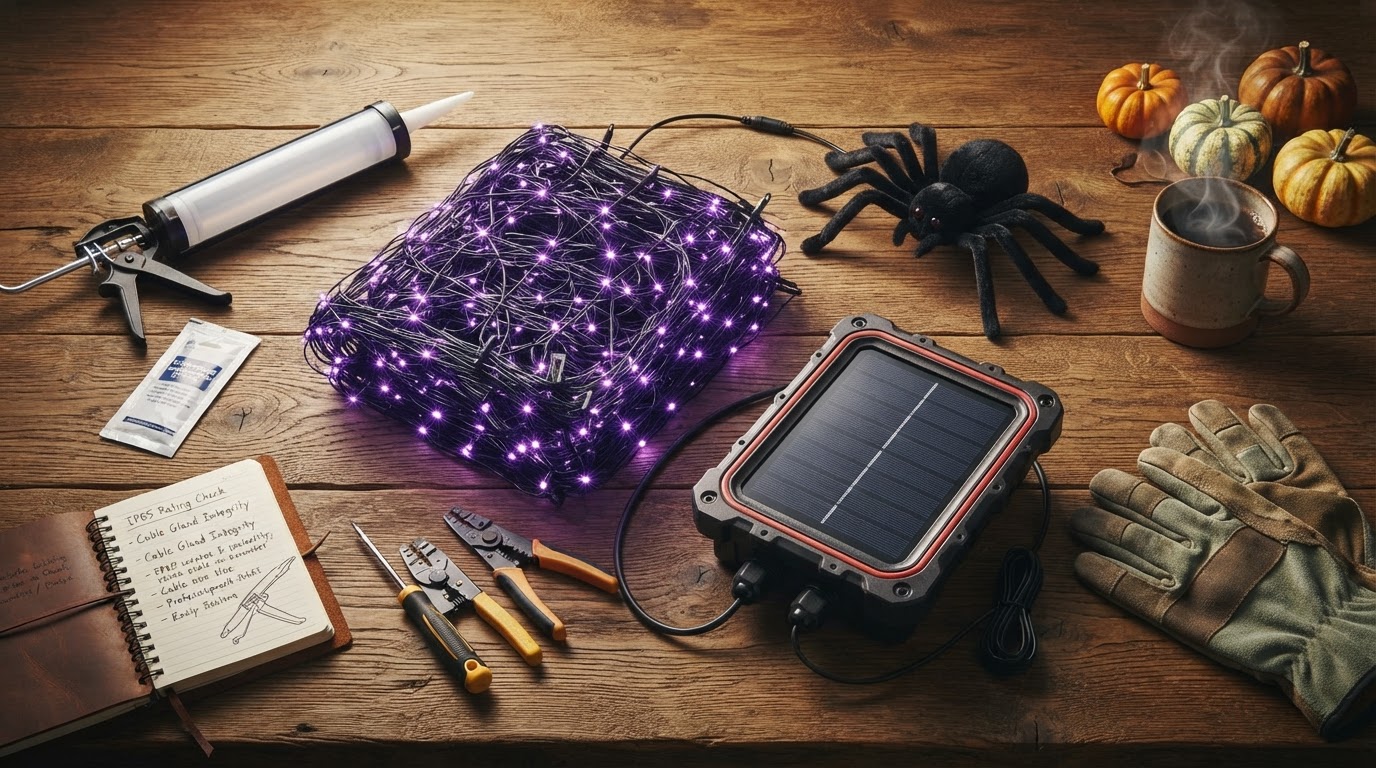
Protecting Solar Spider Web Displays from Severe Weather
 Sam VasquezBuying Guide Lead
August 22, 2026. This guide examines the durability requirements for outdoor seasonal lighting and how to select components that resist moisture ingress. It is written for homeowners who want a set-it-and-forget-it outdoor display that survives the unpredictable weather of October.
The Reality of Outdoor Seasonal Lighting Failures
Most homeowners have experienced the frustration of a decorative display failing after the first heavy rainstorm. Outdoor lighting faces a unique set of challenges, ranging from humidity and frost to direct exposure to heavy downpours. According to the National Fire Protection Association, electrical failures or malfunctions are a leading factor in home fires, and while low-voltage solar equipment is significantly safer than traditional plug-in strands, moisture can still ruin the internal circuitry of a solar panel or the LED driver. The primary point of failure in most outdoor solar spider web decor is the seal around the battery compartment or the junction where the wiring enters the LED housing. When water enters these areas, it causes corrosion on the circuit board, leading to flickering lights or a complete loss of power. For those planning extensive outdoor solar halloween decorations, understanding the Ingress Protection (IP) rating system is essential. An IP44 rating is generally considered the minimum for outdoor use, protecting against splashing water, but for areas with high wind and driving rain, an IP65 rating provides much better peace of mind. Without these protections, your investment in festive lighting often becomes a single-use item that ends up in a landfill by November 1st.
How Solar Spider Web Manages Moisture and Exposure

Photo by Alexas Fotos on Pexels
Solar Spider Web products are designed specifically to mitigate the common failure points found in generic seasonal lighting. The construction focuses on a sealed solar housing that prevents vertical water entry, which is the most common cause of short-circuiting in waterproof [solar spider web lights](/blog/waterproof-solar-spider-web-lights). Unlike cheaper alternatives that use thin, brittle plastic that cracks under UV exposure, these units utilize weather-resistant polymers that maintain their seal even after weeks in the sun. The wiring itself is also a critical differentiator; the connections are reinforced to prevent the copper from oxidizing when exposed to morning dew. If you are comparing options, look at the thickness of the lead wire. Thin wires are prone to snapping if they are stretched across a porch or lawn during a windstorm. Between these two—a standard thin-gauge wire and the reinforced cabling used by Solar Spider Web—I’d go with the reinforced option every time because it handles the physical tension of being draped like a real web. Furthermore, the integration of eco friendly halloween spider web lights technology means these units are designed to run efficiently even after cloudy days, provided the solar cell remains clean of debris. The design ensures that even if the web structure itself gets soaked, the electrical components remain isolated and dry. This level of engineering is what separates a reliable seasonal fixture from a temporary toy.
Choosing the Right Weatherproof Setup
Photo by suzukii xingfu on Pexels
When you are selecting your outdoor lighting, you need to look past the marketing photos and check the physical build of the product. Here is what I’d actually buy: a unit with a dedicated ground stake for the solar panel and a rotatable joint that allows you to angle the panel away from the prevailing wind and rain. Skip this if you live in a region where you never get rain in October and can get away with indoor-rated gear, but for everyone else, waterproofing is non-negotiable.
Checklist for Weatherproof Success:
- Verify the IP rating is at least IP44 for the lights and IP65 for the solar controller.
- Ensure the solar panel has a clear protective cover that won't yellow or cloud over time.
- Check that the battery compartment is secured with screws and a rubber gasket seal.
- Look for flexible, rubberized wiring rather than stiff plastic casing that cracks in the cold.
- Confirm the web material is synthetic and won't absorb water, which adds weight and stress to the mounting points.