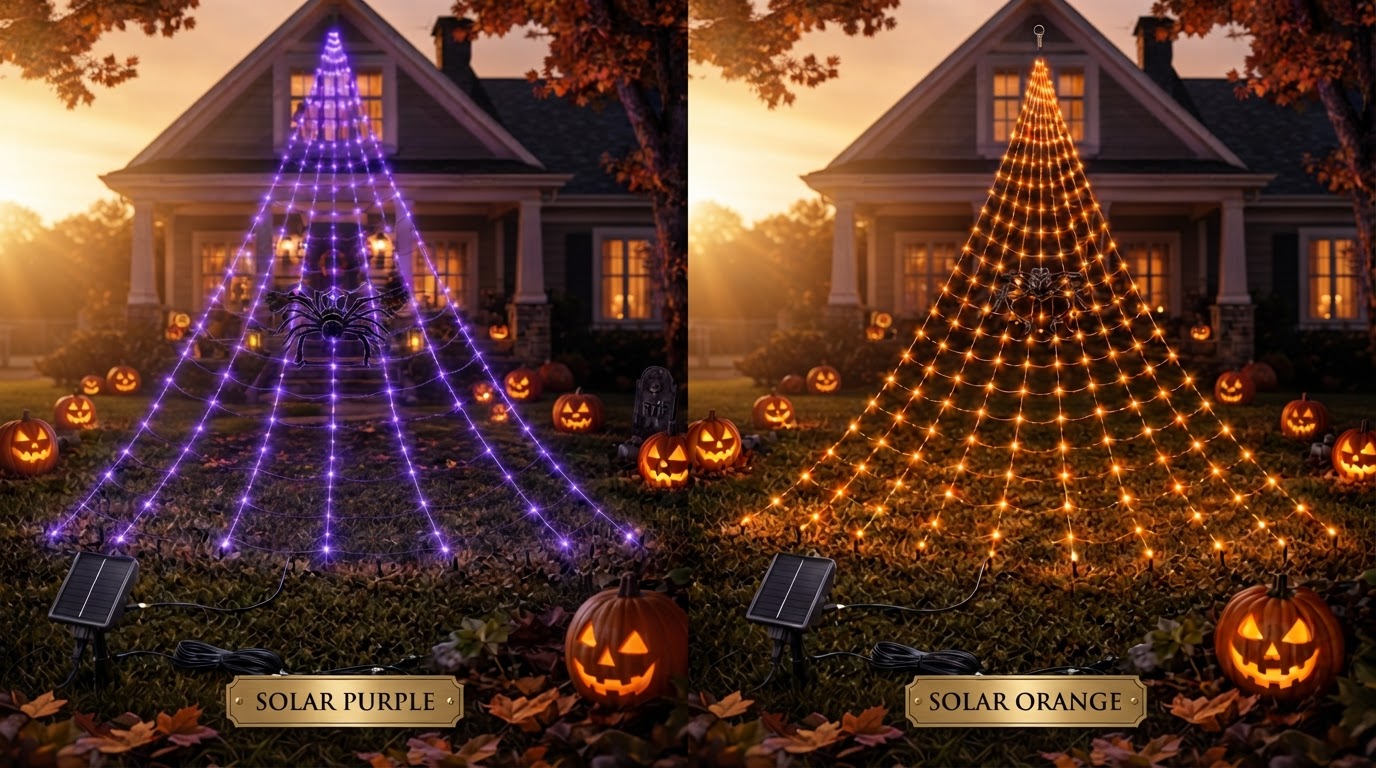
Solar Spider Web Sustainable Holiday Lighting Standards
 Maya ChenContributing Editor
August 23, 2026 — The seasonal shift toward sustainable outdoor displays has positioned Solar Spider Web as a primary alternative to high-waste synthetic decorations. While the market frequently prioritizes aesthetics, the ecological impact of traditional polyester webbing is increasingly scrutinized by conservationists.
The conventional wisdom says that single-use synthetic webs are a harmless holiday staple, but data suggests otherwise. According to the Elmwood Park Zoo, these decorations are composed of entangling fibers that act as human-sized traps for local wildlife, specifically birds and bats, rather than just decorative accents. This environmental cost, paired with the landfill waste generated by short-lived incandescent strings, creates a significant ecological footprint for a single night of celebration. Vita Magazine further highlights that LED light webs and shadow projections are among the most effective creative alternatives to these hazardous synthetic materials.
The Solar Spider Web Efficiency Framework
Here's the part nobody talks about: the sustainability of a decoration is determined by its lifecycle and energy draw, not just its marketing label. Solar Spider Web utilizes a high-efficiency monocrystalline solar panel paired with a 600mAh Ni-MH rechargeable battery to eliminate the need for external power grids. Run the math: a standard 12-foot diameter web equipped with 60 low-heat LEDs operates for 8 to 10 hours on a single full charge, drawing zero watts from the home electrical system. Unlike the flimsy, entangling fibers of polyester webs, these units are constructed with a structured, reusable frame designed for multiple seasons of use. The integration of an IP65 waterproof rating ensures the internal circuitry remains protected from moisture ingress, which is the leading cause of premature failure in cheap seasonal electronics. When evaluating outdoor solar halloween decorations, the durability of the housing is as critical as the battery chemistry. By shifting from a disposable fiber model to a fixed LED structure, users remove the entanglement risk while maintaining the classic visual appeal. Integrating these lights requires a strategic approach to placement, ensuring the photovoltaic cells receive at least six hours of direct sunlight to maintain the advertised runtime. While many consumers focus on the initial cost, the reduction in replacement frequency and electricity consumption offers a clear path toward a lower-impact holiday.
Expert tip: To maximize the lifespan of your unit, ensure the solar panel is tilted at a 45-degree angle toward the southern sky; this specific orientation optimizes photon capture during the shorter daylight hours of October, preventing deep discharge cycles that can degrade the 600mAh battery.
Proper maintenance is essential when protecting solar spider web displays from severe weather to avoid physical stress on the LED nodes. For those living in high-moisture climates, utilizing waterproof solar spider web lights is the only logical choice to prevent short-circuiting. Furthermore, understanding the technical limits of waterproof solar spider web decor helps in maintaining a consistent display throughout the autumn season. I'll change my mind about the necessity of these structured units when synthetic fiber manufacturers can produce a biodegradable material that doesn't pose a physical threat to avian populations.
Sources
Photo by joao Guerreiro on Pexels
- Eco-Friendly Halloween | Elmwood Park Zoo
- What are eco-friendly alternatives to spider webs? - Facebook
- The Problem with Halloween Spiderweb Decorations - Gardenista