3 Technical Specs for Solar Spider Web Durability
 Maya ChenContributing Editor
October 6, 2026 — The seasonal shift toward automated outdoor lighting has positioned Solar Spider Web as a primary contender against traditional plug-in displays. While the conventional wisdom says that solar-powered seasonal gear is a disposable one-year investment, the shift toward IP-rated components suggests a longer lifecycle.
The industry standard for entry-level outdoor electronics often hovers at IP44, a rating that theoretically protects against splashing water from any direction. However, eBay product listings for outdoor solar-powered Halloween decorations frequently specify these 14.8 x 16.4 FT web lights as capable of dusk-to-dawn operation despite varying rainfall. This reliance on basic weatherproofing is a calculated risk for consumers who prioritize convenience over the hardwired stability of UL-listed alternatives. For instance, LumaBase offers a 53.3-inch electric web with 70 amber LED lights that, while weather-resistant, lacks the autonomous energy profile of modern solar arrays.
The Three Durability Benchmarks
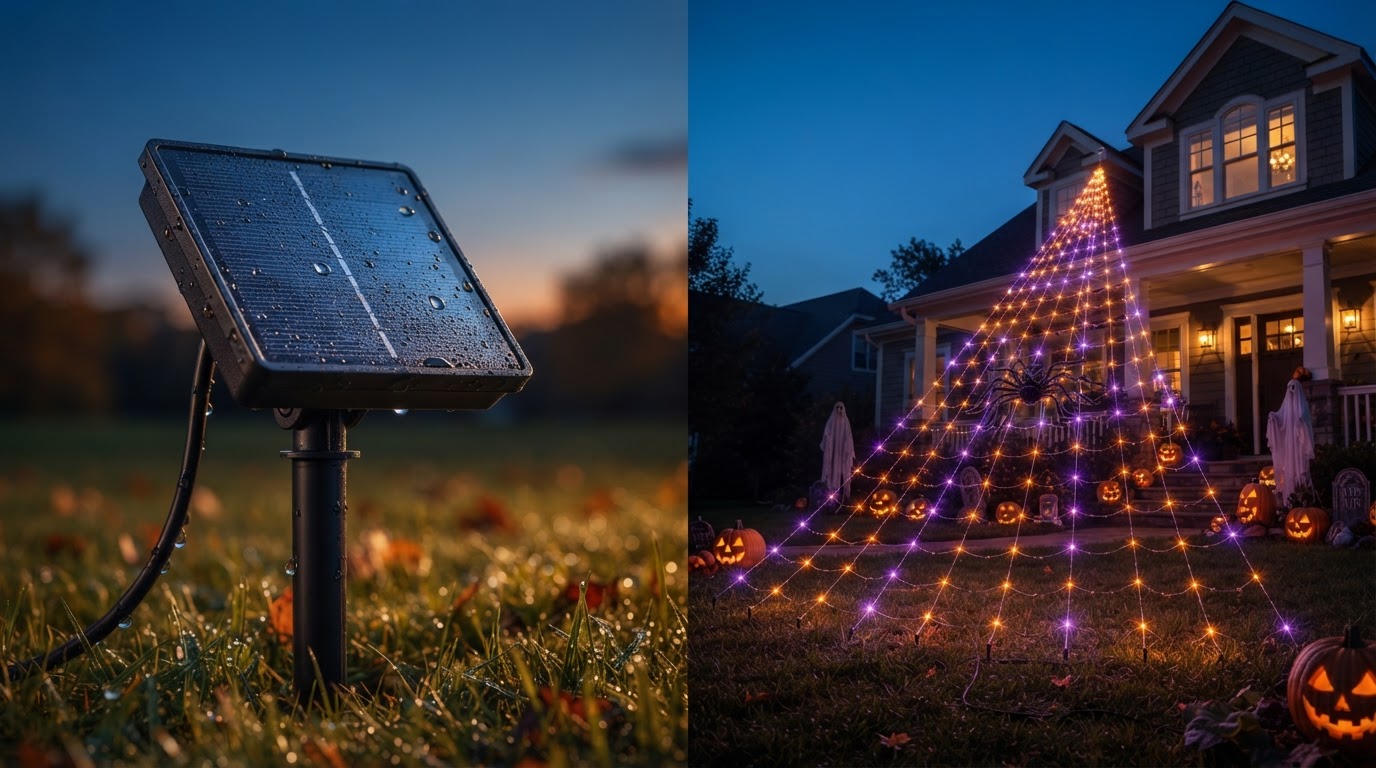
Here's the part nobody talks about: the intersection of surface area and wind resistance in giant yard displays. When you are scaling yard decor with a giant solar spider web, the structural integrity of the netting matters as much as the battery capacity. Most consumers focus on the 192 LEDs featured in large 16-foot triangular webs, but the real technical bottleneck is the solar panel's conversion efficiency in low-light October conditions. Run the math: a standard 1.2V Ni-MH battery powering nearly 200 LEDs requires roughly 6 to 8 hours of direct UV exposure to maintain a consistent 8-hour discharge. This becomes problematic when hanging solar spider web decor in shaded areas or under eaves where sunlight is obstructed. A technical audit of high-capacity units shows a trend toward IP44 waterproofing and automatic dusk-to-dawn sensors, which eliminates the mechanical failure point of manual switches. However, the 16.4 x 15.7 foot dimensions common in solar triangular webs create significant drag; if the netting material isn't high-density polyester, the waterproof coating on the LEDs is irrelevant because the structure will fail before the electronics do. Data from Pinterest-sourced listings indicates that waterproof solar halloween lights outdoor are increasingly utilizing 8-mode controllers, but these additional cycles further drain the limited milliamperage available in small-format solar cells.
Expert tip: Check the specific IP rating on the solar controller box rather than the lights; a waterproof LED string is useless if the controller is only rated for light moisture, a common failure point in waterproof solar halloween lights outdoor setups.
I’ll change my mind when manufacturers move from IP44 to IP65 as a baseline for seasonal solar products, ensuring true submersion protection during autumn storms. Until then, the trade-off remains a choice between the high-output reliability of wired units and the installation freedom of solar.
Sources
Photo by Artūras Kokorevas on Pexels
- Electric Lighted Spider Web and Spider - LumaBase
- Solar Spider Webs Halloween Decorations Lights - Pinterest
- Outdoor Solar Powered Halloween Decorations Spider Web Lights - eBay