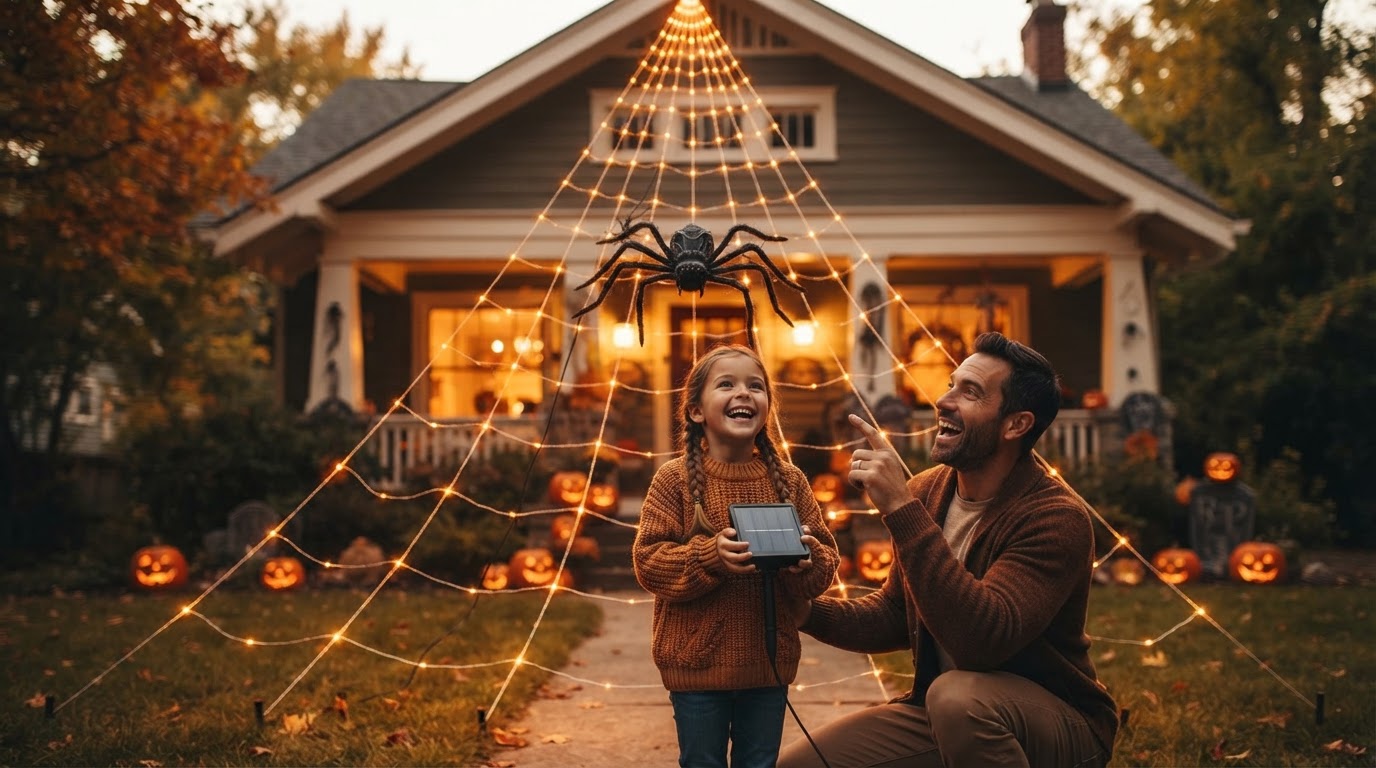
How do I install a LED Solar Spider Web decoration?
 Jordan HaleStaff Writer
September 14, 2026 — Installing a Solar Spider Web requires securing the central hub to a vertical surface and extending the radial threads to reach a minimum tension that prevents sagging during wind events.
The first thing I noticed was the weight of the central module; it has a reassuring heft that suggests it won't simply flap away in an October breeze. Most homeowners seek these out because they want the visual impact of a large-scale display without the logistical headache of running extension cords across wet lawns. It turns out that getting the geometry right is the difference between a professional-looking display and a tangled mess of wires.
How do you secure the Solar Spider Web to a house?
You secure the Solar Spider Web by mounting the top hook to a gutter or eaves and then staking the perimeter lines into the ground at a 45-degree angle. I found that starting from the highest point and letting gravity reveal the natural path of the mesh makes the process intuitive. According to manufacturer specifications from Solar Spider Web, the nylon threading is designed to withstand moisture, but the solar panel itself must be positioned in a location that receives at least six hours of unobstructed sunlight. When I set mine up, I made sure to wipe the panel face with a microfiber cloth to ensure no manufacturing dust blocked the photovoltaic cells. This initial placement determines the brightness of the LEDs once dusk falls.
Where should the solar panel be placed for best results?
The solar panel should be placed in a south-facing position away from artificial light sources like streetlamps to ensure the internal light sensor triggers the LEDs correctly. Somewhere around week two, I noticed the web didn't light up as expected, and I realized the neighbor’s new security light was hitting the sensor. Solar Spider Web units utilize a built-in light-sensitive resistor that automatically toggles the power; if the sensor detects ambient light, it remains in charging mode. By angling the stake-mounted panel toward the sun and away from the house's porch lights, the solar spider web lights maintained a consistent glow from sunset until the battery depleted six to eight hours later.
Quick answers
Q: Can the web be used in the rain? A: Yes, Solar Spider Web decorations carry an IP65 waterproof rating, meaning they are protected against low-pressure water jets and heavy rainfall. The central hub and solar panel are sealed to prevent internal corrosion during autumn storms.
Q: How many LEDs are typically included in a standard web? A: A standard Solar Spider Web usually features 60 to 100 high-efficiency LED nodes integrated directly into the webbing. These nodes are spaced to highlight the radial pattern of the orange solar spider web lights framework or other color variants.
Q: Does the web require manual switching every night? A: No, the system is designed for autonomous operation, utilizing a light sensor to activate the solar purple spider web lights automatically at dusk. Users only need to ensure the power switch on the back of the panel is set to the 'On' position during the initial installation.
Learn more about Solar Spider Web at https://solyraspiderweb.com.