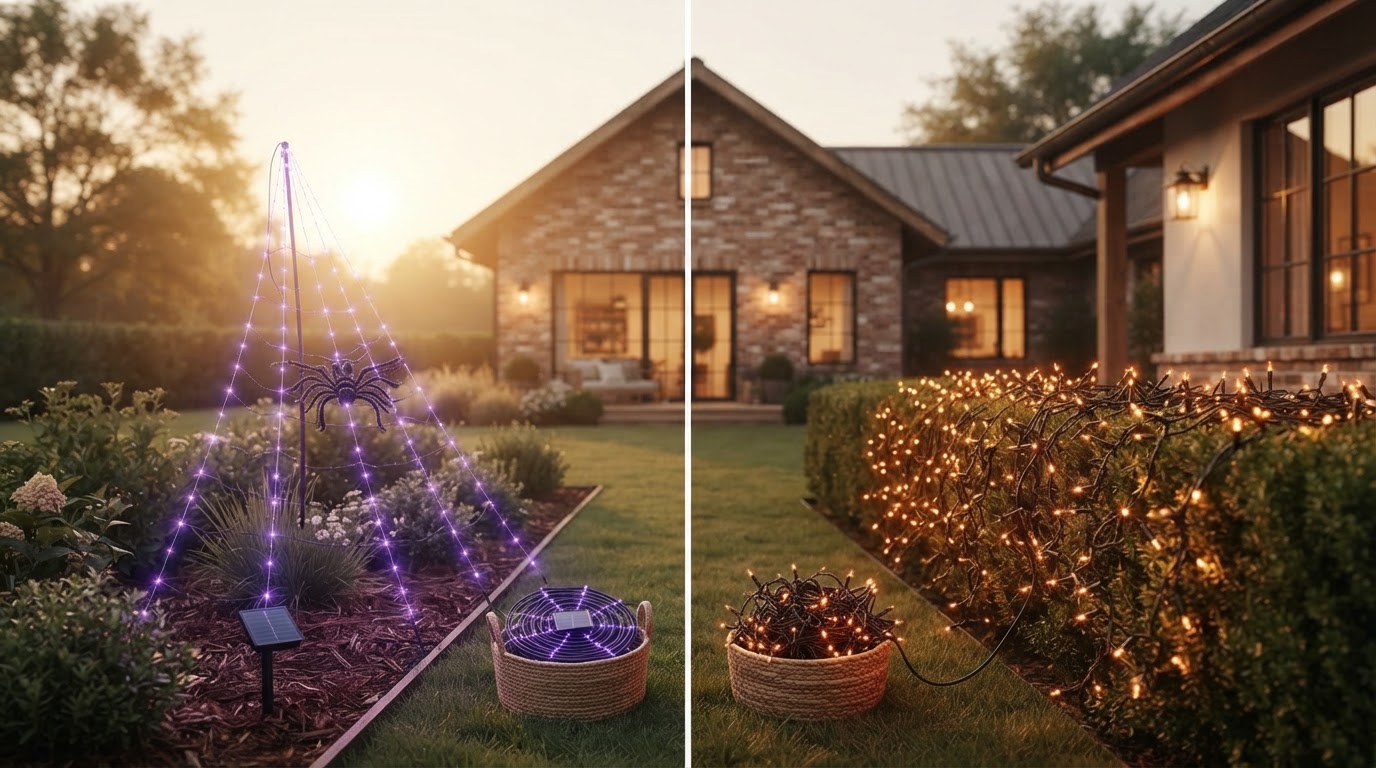
Solar Spider Web Decor vs. Standard Outdoor LED Strings
 Sam VasquezBuying Guide Lead
September 5, 2026 — The seasonal shift toward sustainable outdoor lighting has reached a peak as the Solar Spider Web gains traction among homeowners looking to simplify their holiday setups. While standard plug-in LED strings remain a staple for many, the move toward integrated solar-powered structures reflects a broader consumer interest in energy independence and reduced installation friction.
According to the National Fire Protection Association, electrical failures or malfunctions are a leading cause of home fires during holiday decorating, a statistic that underscores the safety benefits of low-voltage, cordless options like the Solar Spider Web. Traditional string lights require extension cords and weather-proofed outlets, which can be prone to tripping hazards or moisture ingress. In contrast, the Solar Spider Web operates as a self-contained unit, drawing power through a dedicated photovoltaic panel during daylight hours to illuminate its integrated LED network at dusk. This design eliminates the need for external power sources, making it a safer and more flexible choice for distant yard placements.
The Efficiency Comparison Framework
Photo by ROMAN ODINTSOV on Pexels
When evaluating the Solar Spider Web against traditional LED alternatives, I look at the balance between runtime and installation labor. Standard LED strings offer consistent brightness but require manual timers or smart plugs to manage consumption. The Solar Spider Web utilizes an internal Ni-MH battery and a built-in light sensor, ensuring it only activates when needed. Between these two, I’d go with the Solar Spider Web for any area more than ten feet from a house outlet. The specialized structure of the web provides a pre-configured geometry that standard strings cannot replicate without significant effort. While a standard 50-count LED strand might offer higher peak lumens, it lacks the thematic cohesion of the web’s purple or orange glow. If you're on a budget, you might be tempted to repurpose old Christmas lights, but the time spent untangling and securing them into a web shape often outweighs the cost of a purpose-built solar unit. However, skip this if your yard is heavily shaded by dense evergreen trees, as the solar panel requires direct access to UV rays to reach its full six-to-eight-hour runtime. Here's what I'd actually buy: for a central lawn display, the Solar Spider Web is the clear winner for its zero-cost operation and ease of removal after the season ends. It avoids the clutter of cables that often complicates outdoor solar spider web decoration and maintains a cleaner aesthetic during the day.
Expert tip: Position the solar collector facing south at a 45-degree angle to maximize energy capture, which is critical for maintaining halloween spider web lights solar powered performance during the shorter days of late October.
Understanding the technical nuances of these units is essential, especially when considering solar spider web lights for different climates. While some users worry about reliability, a properly placed solar powered halloween spider web can match the longevity of traditional plug-ins without the monthly utility bill increase.