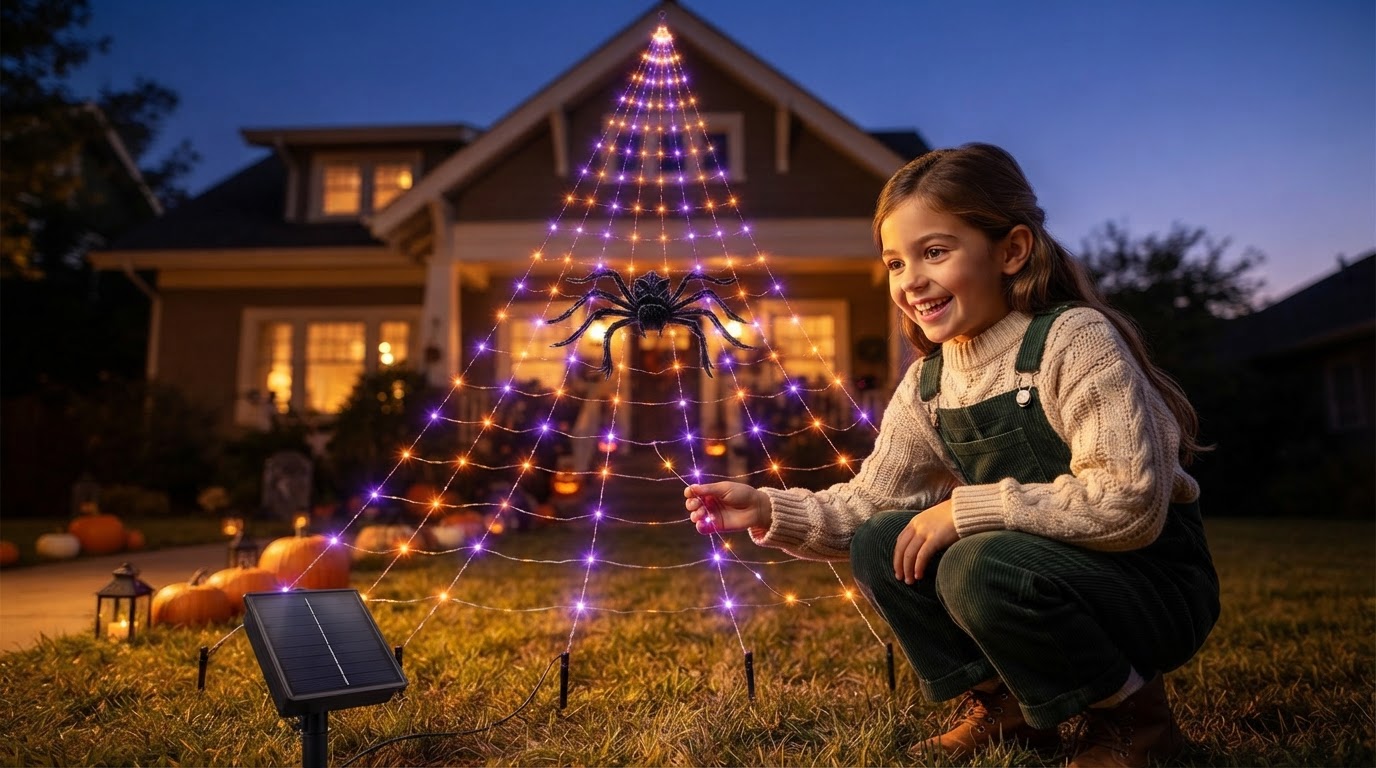
How do I install a LED Solar Spider Web decoration?
 Daniel OkaforField Tester
September 22, 2026 — Installing a LED Solar Spider Web decoration requires securing the central anchor point at an elevated height and positioning the solar panel in a location receiving at least six hours of unobstructed sunlight to power the internal LEDs.
Homeowners often struggle with the geometry of triangular webs or the weight of integrated lights during high winds. I tested this for a week in my own yard to determine how to balance the tension of the nylon ropes without snapping the internal wiring of the LEDs. Ensuring the display remains functional through October requires more than just hanging it; it requires precise ground staking and panel orientation.
Where should the solar panel be placed for maximum LED brightness?
The solar panel must be placed in a south-facing position away from the shadow of the house or overhanging eaves to ensure the internal battery reaches full capacity by dusk. During my setup, what surprised me was how even a small amount of shade from a leafless branch reduced the nighttime run-time by nearly three hours. To get the most out of the LEDs, the panel needs to be clear of the web's own shadow, which can be tricky when you are using outdoor solar spider web decorations that cover a large surface area.
I found that mounting the panel on a stake at least two feet away from the base of the web prevented the decorative ropes from obstructing the cells. According to product specifications for the Hiboom 23ft spider web, these units often feature 180 LEDs and multiple lighting modes, which draw significant power. If the panel is tucked under the web for aesthetics, the battery rarely hits the voltage needed to sustain the brighter flash modes. I ended up moving my panel twice before I found the sweet spot where the morning sun hit it directly.
How do you secure the web to prevent sagging or wind damage?
To secure the web effectively, you must anchor the top hook to a sturdy gutter or branch and use heavy-duty ground stakes to maintain outward tension on the radial lines. Day three is where I noticed that the weight of the LED strings, especially on larger solar spider web net lights, causes the nylon to stretch when wet. If you don't account for this slack, the web will droop and lose its realistic triangular shape.
I used a simple slipknot at each ground stake, which allowed me to tighten the web easily after a rainstorm. For those using a purple solar spider web lights setup, the visibility of the web depends on that tight, geometric form. Pinterest data regarding 16.4-foot triangular webs indicates that using all 192 LEDs effectively requires a stable frame; otherwise, the lights bunch together and look like a tangled mess rather than a web. What I'd do differently next time is use metal tent stakes instead of the plastic ones that come in the box, as the metal holds better in soft October soil when the wind picks up.
Quick answers
Q: How many lighting modes do these solar webs typically have? A: Most models, including the Hiboom 23ft version and the 192-LED triangular webs, feature 8 different lighting modes ranging from steady-on to sequential flashing. You cycle through these using a button located on the back of the solar charging brick.
Q: Will the lights turn on automatically if my porch light is on? A: No, the light sensor is usually built into the solar panel, and if your porch light provides more than a few lux of brightness, it will trick the web into thinking it is still daytime. I had to move my panel 10 feet away from my entryway light to get it to trigger at dusk.
Q: How large are the typical LED solar spider webs? A: Commercial options vary, but common sizes include the 16.4 x 15.7-foot triangular models and the massive 23-foot versions from brands like Hiboom. These larger sizes are ideal for covering a two-story span or a significant portion of a front lawn.
Q: Can these webs withstand rain and snow? A: These decorations are generally rated IP65 for water resistance, meaning they handle rain well, but the solar panel must not be submerged in standing water. During my test, the web stayed lit through a heavy thunderstorm, though I had to clear debris from the solar panel the following morning.
For more specific seasonal setups, see our guide on Halloween spider web lights solar powered.
Learn more about Solar Spider Web at https://solyraspiderweb.com.
Sources
- Giant 23ft Spider web decoration with LED lights from Hiboom - YouTube
- Spider Yard Web Light-Up LED | Halloween Express
- Spooky season just got a whole lot more magical. 🕷️ These solar ...