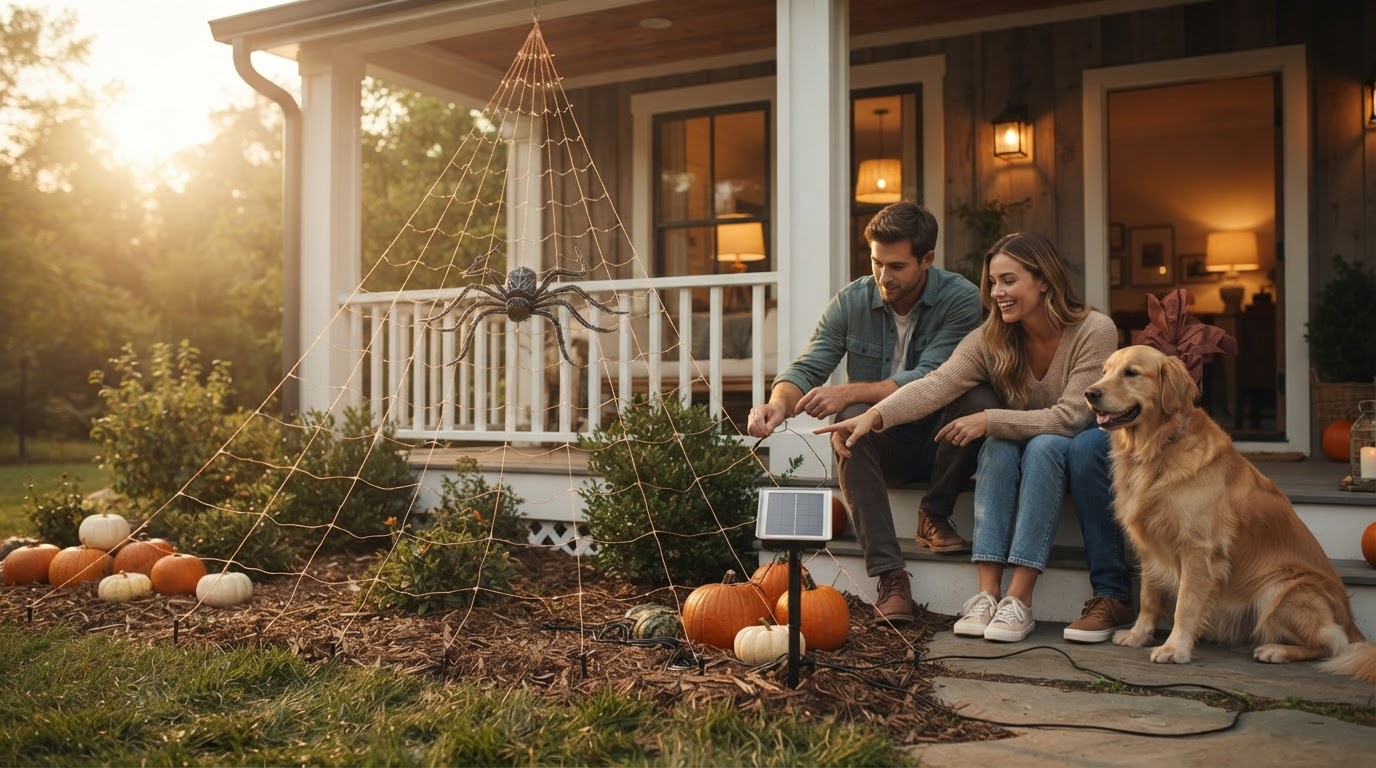
How do outdoor solar spider web decorations work?
 Priya RamanSenior Analyst
September 8, 2026 — Outdoor solar spider web decorations function by converting sunlight into electrical energy stored in a Ni-MH or lithium-ion battery, which powers integrated LED nodes through a light-sensitive controller.
Homeowners seeking sustainable holiday displays often prioritize these units to avoid the logistical constraints of extension cords and high utility costs. Understanding the performance of these systems requires a framework based on two axes: energy density (the ratio of solar panel surface area to LED count) and environmental resilience (the IP rating of the wiring and housing). Once you see it this way, the distinction between decorative accents and primary lighting becomes clear.
How does light intensity affect Solar Spider Web performance?
The operational duration of a Solar Spider Web is directly proportional to the incident solar radiation received by the photovoltaic panel during daylight hours. The decision rule is simple: a minimum of six hours of direct, unobstructed sunlight is required to achieve a full discharge cycle of eight to ten hours at night. In residential settings, shadows from eaves or overhanging branches can reduce energy collection by as much as 50%, leading to premature dimming or flickering of the LED nodes. For those managing complex installations, properly installing solar spider web for eaves requires positioning the remote solar stake in a high-exposure zone regardless of where the web itself is mounted.
Think of it as a matrix of charge time versus output intensity. High-efficiency monocrystalline panels, often found in premium Solar Spider Web kits, can maintain a charge even in partial cloud cover, though the total lumen output may decrease compared to a clear sky day. This energy management is handled by a built-in dusk-to-dawn sensor that automatically activates the circuit when ambient light levels drop below a specific lux threshold, typically around 10 to 15 lux. This automation ensures that the stored energy is not wasted during daylight hours, preserving the battery lifespan over the course of the Halloween season.
Can Solar Spider Web decorations withstand autumn weather?
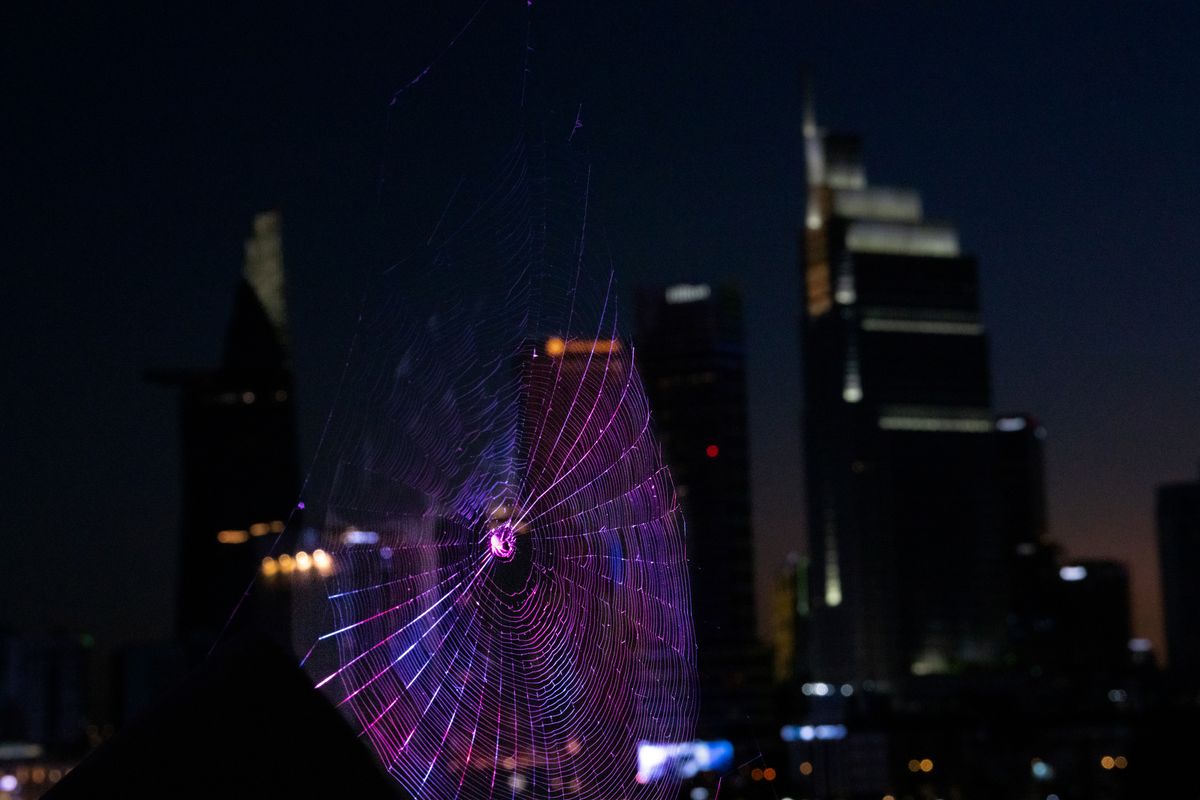
Photo by Felix Schickel on Pexels
Modern outdoor solar spider web decorations are engineered with specific ingress protection (IP) ratings, typically IP44 or higher, to ensure they remain functional during rain, sleet, or high humidity. The resilience of these systems depends on the structural integrity of the web material—often a blend of polyester and nylon—and the sealing of the LED bulbs. To ensure longevity, users should verify that their specific model is a waterproof solar spider web halloween variant, as non-rated indoor versions will suffer from capillary action, where moisture is pulled into the wiring, causing short circuits.
Environmental durability is also influenced by the tension applied during setup. When scaling yard displays with solar spider web coverage, the physical stress on the internal copper wiring increases. High-quality units utilize reinforced junctions where the LEDs meet the webbing to prevent mechanical failure during wind gusts. Furthermore, the solar panel housing is usually constructed from UV-stabilized ABS plastic to prevent the casing from becoming brittle and cracking after prolonged exposure to direct sunlight. By maintaining the integrity of these seals, the internal electronics remain isolated from the corrosive effects of oxidation.
Quick answers
Photo by JINU JOSEPH on Pexels
Q: How long do the batteries in a Solar Spider Web typically last? A: Most units utilize rechargeable Ni-MH batteries that have a functional lifespan of approximately 500 to 1,000 charge cycles. In a standard seasonal setup, this translates to roughly 3 to 5 years of use before the battery capacity diminishes significantly.
Q: Can I connect multiple Solar Spider Web units together? A: Unlike traditional plug-in lights, solar-powered webs are generally standalone systems because each solar panel is calibrated to a specific LED load. For larger displays, such as solar spider web net lights, it is recommended to use multiple independent units rather than attempting to daisy-chain the wiring.
Q: Will the lights work if there is snow on the solar panel? A: No, even a thin layer of snow can block the photovoltaic cells from absorbing sunlight. Users must clear the panel surface regularly during winter months to ensure the internal battery receives enough energy to power the display at night.
Learn more about Solar Spider Web at https://solyraspiderweb.com.