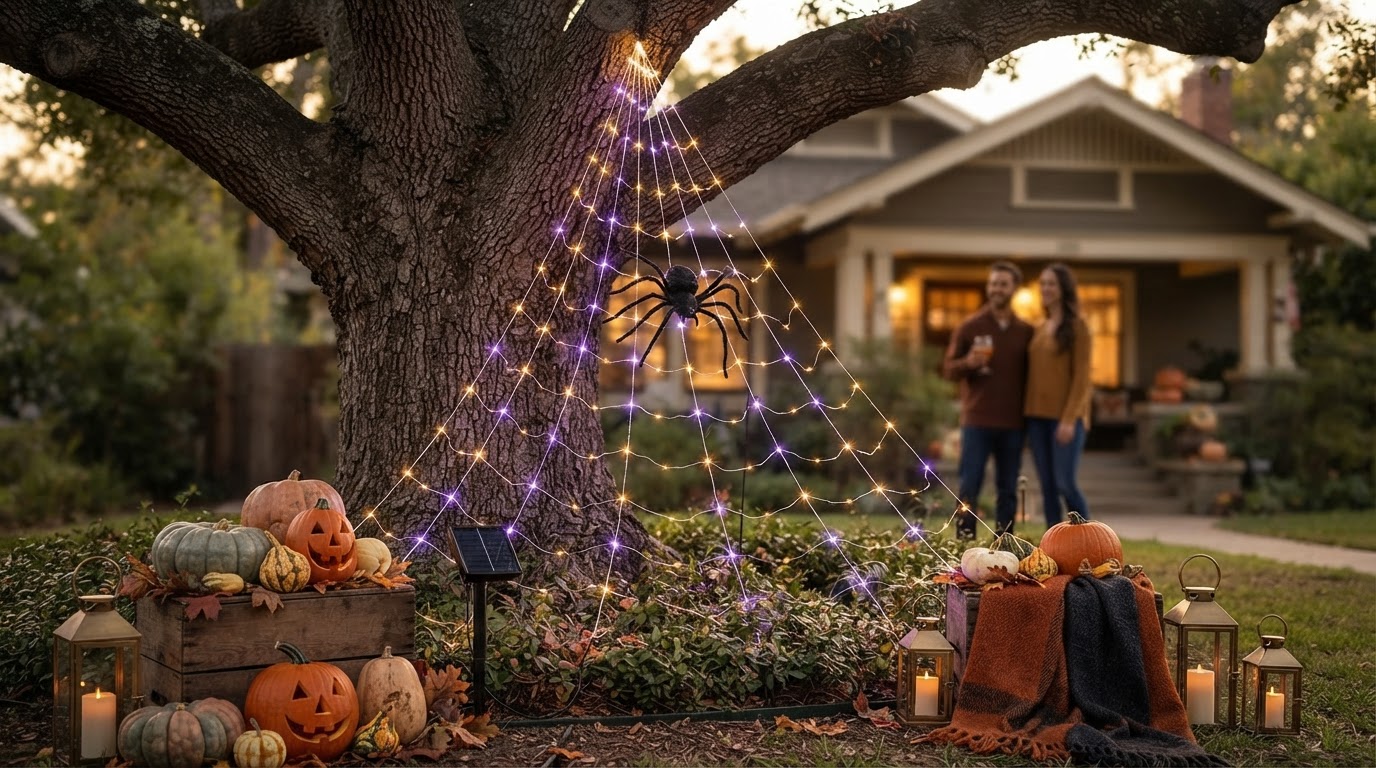
Solar Spider Web Decorating for Sustainable Halloween Displays
 Jordan HaleStaff Writer
August 26, 2026. This exploration covers the practical integration of solar-powered lighting into seasonal yard displays to reduce energy waste. It is written for homeowners seeking high-impact visual effects without the logistical burden of extension cords.
I remember standing in the driveway last October, the air crisp enough to see my breath, staring at a tangled knot of green extension cords that snaked across the lawn like plastic ivy. The first thing I noticed was the sheer weight of the infrastructure required just to light up a few bushes. Between the weather-proof power strips and the constant worry about a tripped circuit breaker during a rainstorm, the joy of decorating felt increasingly like a chore. According to the Department of Energy, decorative light strings can contribute significantly to seasonal energy spikes, and for those of us trying to maintain a lower carbon footprint, the traditional plug-in approach feels increasingly outdated. The transition to solar-powered options isn't just about saving a few dollars on the utility bill; it is about reclaiming the perimeter of the yard where outlets simply do not reach. When you move away from tethered decorations, the entire landscape opens up. You start seeing the old oak tree at the edge of the property or the far corner of the fence line as viable canvases for a solar spider web lights installation. This shift in perspective changes the narrative of the neighborhood display from a localized bright spot near the front door to an immersive, property-wide experience.
Photo by Tom Fisk on Pexels
Somewhere around week two of testing the Solar Spider Web, the true value of the integrated photovoltaic cell became clear. Unlike standard string lights that require manual timers or smart plugs, these units operate on a simple, reliable cadence of light absorption and discharge. The Solar Spider Web features a central hub design where the webbing radiates outward, embedded with weather-resistant LEDs that activate automatically at dusk. It turns out that the placement of the solar panel is the only critical variable in the entire setup. By positioning the stake in a spot that receives at least six hours of direct sunlight, the internal battery stores enough energy to power the purple solar spider web lights well into the early morning hours. The construction of the webbing itself uses a reinforced synthetic fiber that resists sagging when damp, a common failure point in cheaper cotton-based alternatives. If you are aiming for a specific aesthetic, the orange solar powered spider web offers a high-contrast glow that mimics the classic harvest palette while maintaining the same energy-efficient profile. For larger scale projects, the giant solar spider web for yard provides a massive footprint that can cover significant square footage, often serving as the primary focal point that anchors smaller peripheral decorations. The integration of the giant light up spider web solar model allows for a vertical dimension in decorating, as it can be stretched from rooflines to the ground without the safety hazard of dangling power lines.
I keep coming back to the idea that the best outdoor decor is the kind you can set and forget. To achieve that level of autonomy, a structured approach to the initial installation is necessary. Start by identifying the primary sightlines from the street and the front porch to ensure the webbing is visible from multiple angles. When choosing your location, avoid placing the solar sensor directly under a bright streetlamp or powerful porch light, as this can trick the internal photocell into thinking it is still daytime, preventing the LEDs from illuminating. Use the following framework to ensure a successful seasonal run:
- Verify the solar panel surface is clean and free of shipping film to maximize UV absorption.
- Anchor the perimeter points of the web using heavy-duty plastic stakes rather than thin metal ones to prevent lifting during high winds.
- Test the illumination modes—flashing versus steady—during the first night to see which best complements your existing yard layout.
- Ensure the lead wire between the web and the solar stake is buried slightly or pinned down to avoid tripping hazards or lawnmower accidents.
- Angle the solar panel at approximately 45 degrees facing south to capture the low-hanging autumn sun.
To explore the full range of energy-independent holiday lighting, you can Shop Solar Spider Web here.