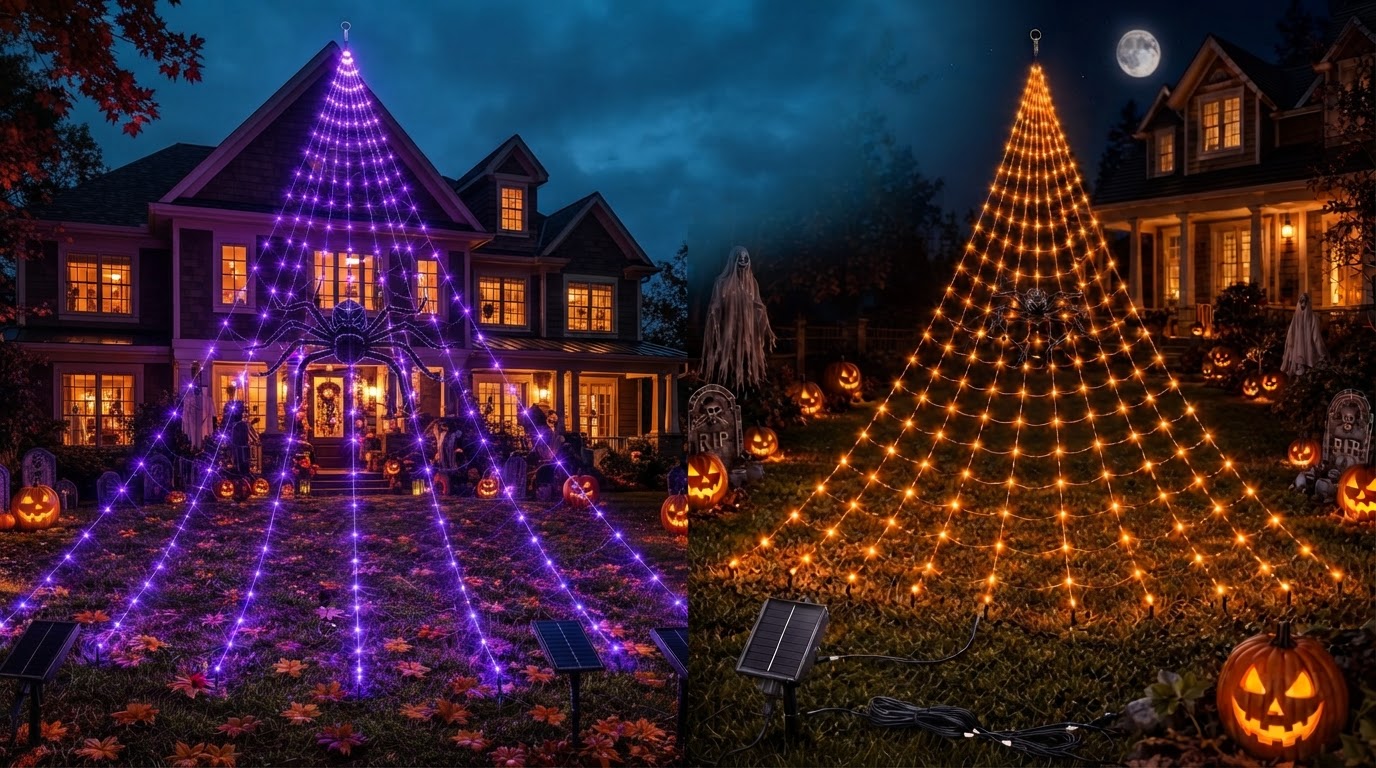
Scaling Yard Decor with the Giant Solar Spider Web
 Jordan HaleStaff Writer
October 24, 2026. This review examines how high-scale solar lighting solutions transform large outdoor spaces during the autumn season. It is written for homeowners seeking to balance significant visual impact with sustainable energy practices.
The first thing I noticed was the sheer physical presence of the netting as I laid it out across the lawn. When you are dealing with a space that spans twenty or thirty feet, standard string lights often vanish into the shadows, leaving the yard looking cluttered rather than curated. There is a specific challenge in lighting a large perimeter without running a hazardous web of extension cords across damp grass. According to Hiboom, a giant 23ft spider web decoration with LED lights can utilize 180 LEDs in green and purple to define a space that would otherwise require multiple traditional plug-in sets. The weight of the rope is substantial enough to hold its shape against a fence or porch, yet light enough that it doesn't sag under its own gravity when fully extended. I spent an afternoon watching the wind catch the fibers, realizing that the scale of these decorations dictates the entire mood of the property. Without a central focal point, large yards often feel disjointed during the holidays. By choosing a massive, illuminated structure, you create a visual anchor that draws the eye upward and outward, making the most of vertical space like rooflines or mature oak trees. It turns out that the transition to these larger formats is less about the "spook factor" and more about the architectural way light interacts with the landscape.
Integrating the Solar Spider Web into a large-scale display solves the logistical nightmare of power access. For those focused on Solar Spider Web and the Shift to Eco-Friendly Lighting, the benefit is immediate: the sun handles the heavy lifting of the energy bill. The specific model featured on Pinterest, a 16.4 x 15.7 Ft Solar Powered Huge Triangular Spider Web, boasts 192 LEDs and eight distinct lighting modes. This density of light is crucial because, in a giant display, sparse lighting creates "dead zones" that look accidental. The solar panel is typically mounted on a stake, allowing for placement in the brightest part of the yard regardless of where the web itself is anchored. I found that placing the panel in a south-facing spot ensured the purple and green glow remained vibrant well past midnight. When considering how does a Solar Spider Web perform in outdoor weather?, the durability of the oversized rope becomes the primary factor. The thicker gauge used in giant versions resists the fraying often seen in smaller, indoor-rated alternatives. During a particularly gusty evening, the web flexed but held its tension, a testament to the engineering required for something of this magnitude. It is a relief to step back and see a 20-foot glowing installation that requires zero manual intervention once the sun goes down, especially when compared to the constant maintenance of battery-operated or plug-in varieties that are prone to tripping breakers in the rain.
Choosing the right scale for your property requires a clear framework to avoid overwhelming the space or under-powering the display. I keep coming back to the idea that more isn't always better; it is about the ratio of light to shadow. A 10ft Halloween Spider Web, like those found on eBay, might suit a standard suburban porch, but for an acre of land, you need the 23ft variants to make a statement. Before committing to a specific size, you must map out your anchor points. A successful 4-step setup for Solar Spider Web lighting depends entirely on having sturdy structures like gutters, trees, or heavy-duty stakes ready to receive the tension. When you move into the "giant" category, the physics of the installation change, and you must account for wind load and the reach of the solar lead wire. It is also vital to consider the solar powered halloween spider web charging capacity; larger webs with more LEDs require longer exposure to direct sunlight to maintain their brightness throughout the night. If your yard is heavily shaded by the very trees you intend to decorate, you may need a model with a detachable panel that can be positioned several feet away in a sunnier patch.
- Measure your primary anchor height to ensure the web reaches the ground at a 45-degree angle.
- Verify the LED count per square foot to ensure the glow is visible from the street.
- Check the lead cable length between the solar panel and the first bulb for placement flexibility.
- Select a model with at least eight modes to allow for static or rhythmic lighting effects.
- Confirm the weather rating of the control box to handle late October frost or rain.
Sources
- Giant 23ft Spider web decoration with LED lights from Hiboom - YouTube
- Solar Spider Webs Halloween Decorations Lights - Pinterest
- Giant 10ft Halloween Spider Web with LED Lights - eBay