Weatherproofing Solar Spider Web Installations
 Maya ChenContributing Editor
October 26, 2026 — As seasonal rainfall increases across the northern hemisphere, Solar Spider Web is recalibrating expectations for how decorative solar arrays perform under sustained moisture exposure.
The conventional wisdom says that any device labeled for outdoor use can survive a month of autumn storms, but the reality of seasonal lighting is often defined by condensation rather than submersion. According to technical specifications shared by Michaels, a waterproof design is essential for components placed in yards and porches to ensure that 3D shapes like spiders and pumpkins maintain electrical integrity during temperature shifts. While many consumers prioritize aesthetic glow, the failure point for most displays is not the LED itself but the ingress of moisture into the battery housing during high-humidity cycles.
The Three-Point Moisture Shield
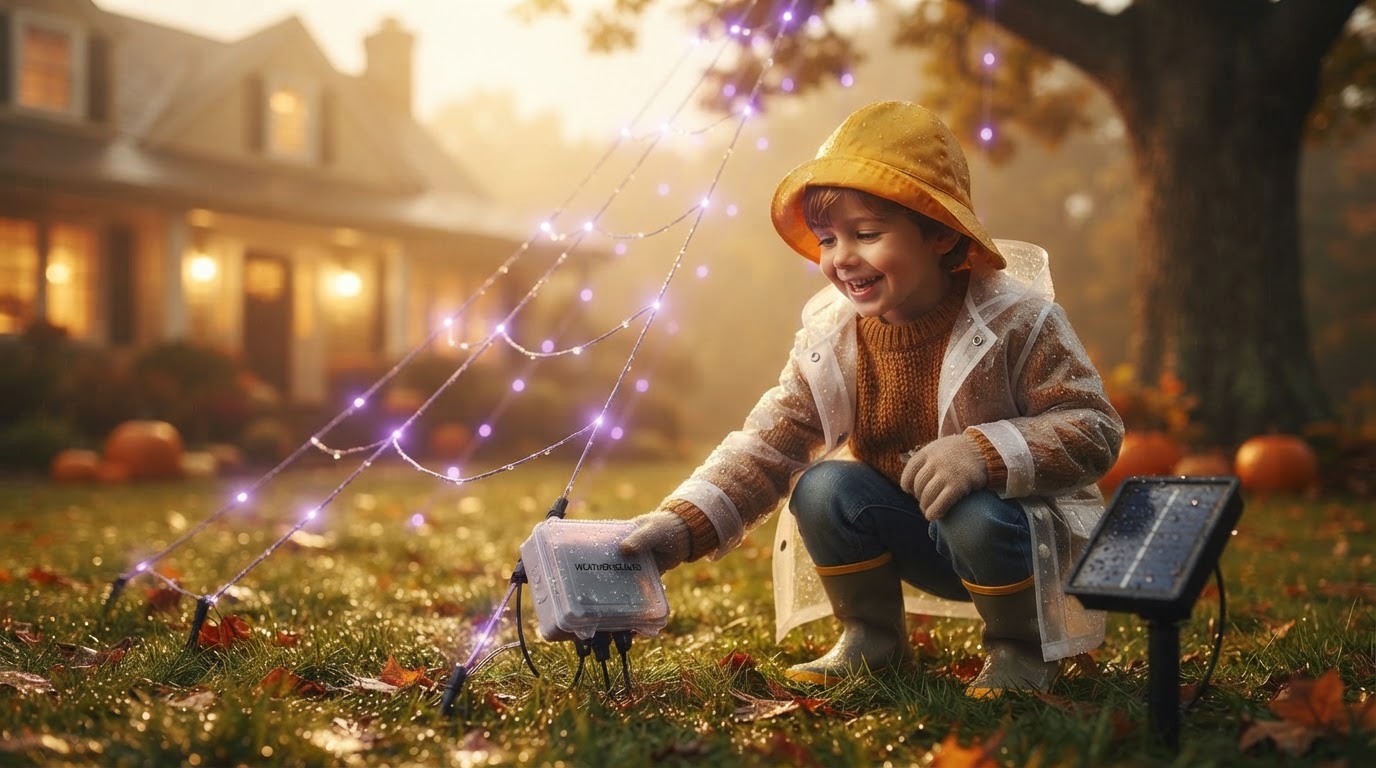
Run the math: a standard outdoor solar unit must endure approximately 720 hours of environmental exposure during the October decorating window, yet many entry-level units lack the gasket integrity required for this duration. Solar Spider Web addresses this by focusing on the seal between the photovoltaic panel and the internal lithium-ion storage. For those deploying Solar Spider Web Lights in high-precipitation zones, the primary concern is the IP (Ingress Protection) rating. An IP44 rating is often cited as sufficient for splashing water, but for ground-level outdoor solar spider web decorations, an IP65 rating is the true benchmark for preventing dust and low-pressure water jets from compromising the circuit. When selecting solar spider web hardware for wet climates, users must ensure the solar stake is positioned at a 45-degree angle to prevent water from pooling on the sensor surface. This angle facilitates natural runoff and prevents the calcium buildup that frequently obscures solar cells, which can drop charging efficiency by as much as 30% over a single week of rain. Furthermore, the connection points between the web filaments and the central power hub require silicone-seated connectors rather than simple friction fits to prevent capillary action from drawing moisture into the wiring.
Expert tip: Use a thin layer of dielectric grease on the battery terminal contacts before the first frost to prevent the oxidation that typically kills solar circuits in humid environments.
Here's the part nobody talks about: even the most robust waterproof solar spider web lights will suffer if the drainage holes in the stake housing become clogged with organic debris. I'll change my mind when manufacturers move toward fully encapsulated, non-serviceable resin housings, but until then, physical maintenance remains the only way to ensure a display lasts until November.
Sources
- Halloween Lights: Pumpkin, Solar Lights and More | Balsam Hill
- Solar Powered Halloween Lights 40 LED with 3D Pumpkin Bat Ghost ...
- Solar Light Halloween Decorations - Pinterest